

Tires
- 17-Jun-2026
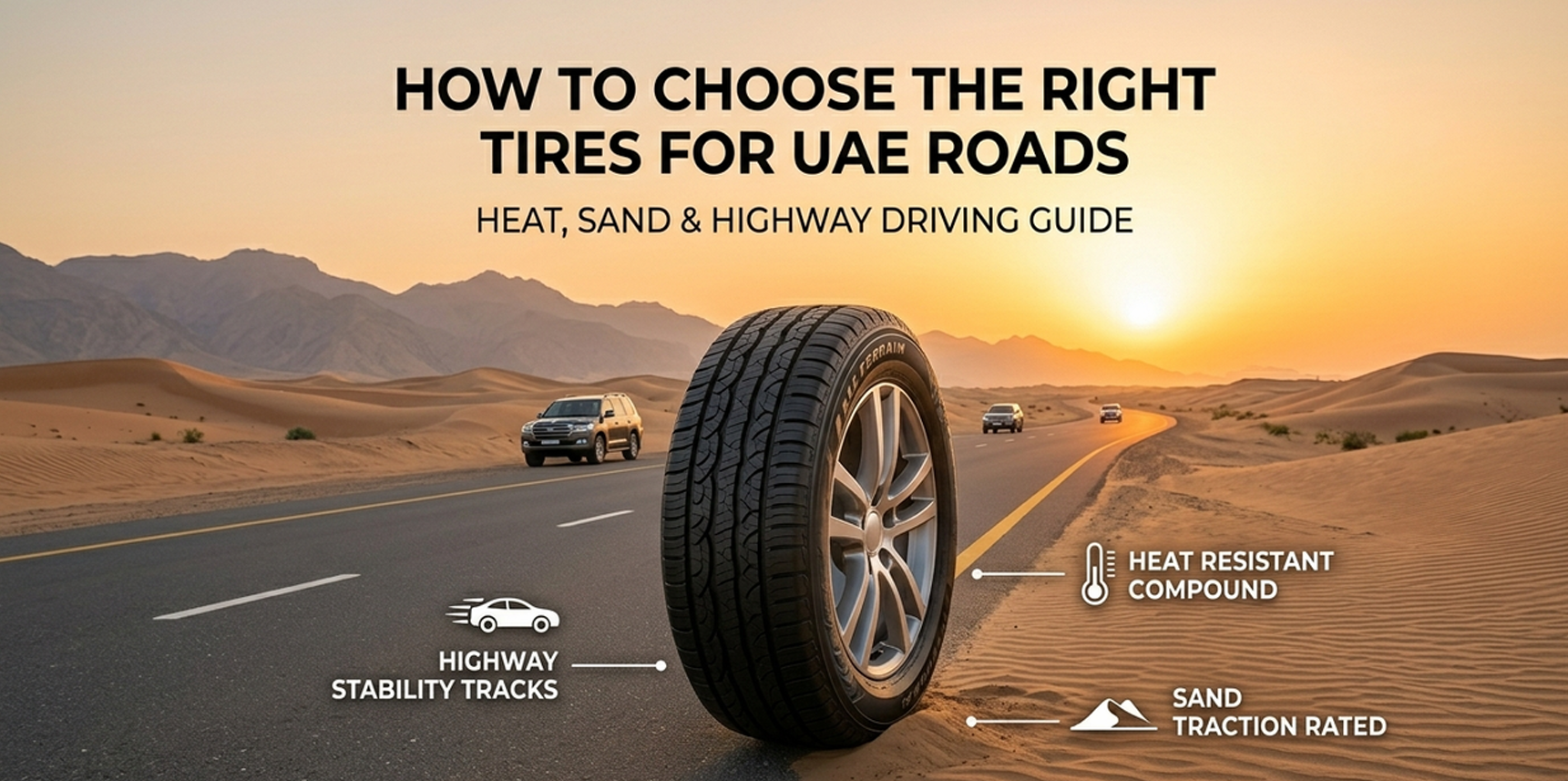
How to Choose the Right Tires for UAE Roads: Heat, Sand & Highway Driving
Tires are one of the most important parts of any vehicle, yet many drivers only think about them when there is a puncture, vibration or visible damage. In reality, tires directly affect safety, comfort, fuel efficiency, braking distance, handling and overall driving performance. Whether you drive a sedan, SUV, pickup, commercial vehicle or 4x4, choosing the right tires is essential.
In regions like the UAE and GCC, tires face some of the toughest driving conditions. High temperatures, hot road surfaces, long highway drives, desert sand, construction zones and sudden braking in traffic all place pressure on tires. A tire that performs well in cooler climates may not always be suitable for extreme heat and mixed road conditions.
The right tire is not only about brand or price. It is about selecting the correct size, load rating, speed rating, tread pattern and quality based on your vehicle and driving needs. This guide will help vehicle owners understand how to choose the right tires for local road conditions and avoid common mistakes.
Why Tires Matter More Than You Think
Tires are the only contact point between the vehicle and the road. Even the best engine, brakes and suspension depend on tire grip to perform properly. If the tires are poor, worn out or unsuitable, the vehicle may not stop, turn or handle as expected.
Good tires help improve braking, especially during emergency stops. They also provide better stability at highway speeds and better grip during cornering. For SUVs and 4x4 vehicles, tires also affect off-road capability and comfort on rough surfaces.
Worn or low-quality tires can increase risk. They may lose grip, overheat, create vibration or fail suddenly. This is especially dangerous during high-speed driving.
Understand Your Driving Conditions
Before buying tires, think about how and where the vehicle is used. A person driving mainly inside the city has different needs compared to someone who drives long highway routes every day. A 4x4 owner who enters desert areas needs a different tire compared to a family SUV used mostly for school runs and weekend travel.
For city driving, comfort, braking performance and low road noise are important. For highway driving, heat resistance, stability and durability matter more. For off-road or desert driving, sidewall strength and tread design become important.
Commercial vehicles and pickups need tires that can handle heavier loads and frequent usage. Choosing a tire without considering usage can lead to poor performance and faster wear.
Heat Resistance Is Critical
High temperatures are one of the biggest challenges for tires in the UAE and GCC. During summer, road surfaces become extremely hot. This heat increases tire pressure and puts stress on the rubber compound.
A tire that is not suitable for hot climates may wear faster or become unsafe. Heat can also increase the risk of tire blowouts, especially if the tire is old, underinflated, overloaded or damaged.
When buying tires, choose products designed for hot weather and highway conditions. Trusted tire brands usually test their tires for different climates and driving environments. It is better to choose quality over very low-cost options, especially if the vehicle is used daily.
Check the Correct Tire Size
Every vehicle has a recommended tire size. This information is usually available in the owner’s manual, on the driver-side door frame or on the existing tire sidewall. Tire size includes details such as width, aspect ratio and rim size.
For example, a tire size may look like 265/65 R17. Each number has a meaning. The first number indicates tire width, the second shows sidewall height as a percentage, and the last number indicates wheel rim size.
Using the wrong tire size can affect handling, braking, fuel economy and speedometer accuracy. It can also create rubbing issues or put stress on suspension components.
Always follow the vehicle manufacturer’s recommended tire size unless a professional tire expert suggests an approved alternative.
Understand Load Rating
Load rating tells you how much weight a tire can safely carry. This is especially important for SUVs, pickups, vans and commercial vehicles. If a tire is not designed to carry the required load, it may overheat, wear quickly or fail under pressure.
Vehicles used for business, delivery, construction, transport or towing should never compromise on load rating. Even if the tire looks suitable from outside, the internal strength may not match the actual requirement.
Always check the load index and ensure it is suitable for your vehicle and usage.
Understand Speed Rating
Speed rating shows the maximum speed a tire can safely handle under proper conditions. Since many drivers in the region use highways regularly, speed rating is important.
A tire with a lower speed rating than recommended may not be suitable for fast highway travel. This can affect stability and safety.
However, speed rating does not mean drivers should drive at high speeds. It simply shows the tire’s tested capacity. Always follow road speed limits and safe driving practices.
Tread Pattern and Grip
The tread pattern affects how the tire grips the road, handles water, reduces noise and performs on different surfaces. For normal city and highway use, highway terrain tires or touring tires are usually suitable. They offer comfort, low noise and good road grip.
For SUVs and 4x4 vehicles, all-terrain tires may be considered if the vehicle is used on both road and off-road surfaces. These tires are stronger and provide better grip on sand, gravel and rough tracks. However, they may create more road noise and slightly reduce fuel efficiency.
For serious off-road driving, mud-terrain or specialized off-road tires may be required. But these are not ideal for daily highway use.
The best tire depends on your balance between road comfort and off-road requirement.
Tire Age Matters
Many people check tread depth but forget tire age. Even if a tire looks new, rubber becomes harder over time. Old tires can crack, lose grip and become unsafe.
In hot climates, tire ageing can happen faster. Always check the tire manufacturing date before purchase. This date is shown on the tire sidewall as a DOT code. The last four digits usually indicate the week and year of manufacture.
For example, 2425 means the tire was manufactured in the 24th week of 2025.
Avoid buying very old stock, even if the price is attractive. A fresh tire gives better safety and longer usable life.
Tire Pressure and Maintenance
Even the best tire can fail if it is not maintained properly. Tire pressure should be checked regularly, preferably when the tires are cold. Underinflated tires generate more heat, reduce fuel economy and wear unevenly. Overinflated tires can reduce comfort and affect grip.
Many drivers only check tire pressure before long trips, but it should be part of regular vehicle care. For vehicles used daily, checking at least once every two weeks is a good practice.
Also inspect tires for cuts, cracks, uneven wear, bulges or nails. Early detection can prevent serious problems.
Wheel Alignment and Balancing
If your vehicle pulls to one side, steering vibrates or tires wear unevenly, alignment or balancing may be needed. Poor alignment causes tires to wear faster and affects vehicle control.
Balancing ensures that the tire and wheel rotate smoothly. Unbalanced wheels can cause vibration, discomfort and stress on suspension parts.
Whenever new tires are installed, balancing should be done. Alignment should also be checked, especially if the old tires showed uneven wear.
When Should Tires Be Replaced?
Tires should be replaced when tread depth becomes too low, when there are visible cracks, bulges, sidewall damage or repeated punctures. They should also be replaced if they are too old, even if tread remains.
Driving with worn tires is risky. Braking distance increases, grip reduces and the chance of tire failure becomes higher.
A good tire shop or service center can inspect your tires and advise whether replacement is needed.
Do Not Choose Only by Price
Price is important, but it should not be the only decision factor. Very cheap tires may save money at the time of purchase but can cost more later through faster wear, poor fuel efficiency, noise, discomfort or safety risks.
A good tire provides value through durability, safety, performance and reliability. For daily driving, family vehicles and commercial use, investing in quality tires is a smart decision.
Final Thoughts
Choosing the right tires is one of the simplest ways to improve vehicle safety and performance. In UAE and GCC road conditions, tires must handle heat, highway speeds, sand, heavy loads and daily driving stress.
Before buying tires, check the correct size, load rating, speed rating, tread type, manufacturing date and brand reliability. Also consider your driving style and road conditions. Once fitted, maintain proper tire pressure, rotate tires when required and inspect them regularly.
The right tire gives you better control, safer braking, smoother driving and peace of mind. Whether you are driving through city traffic, cruising on highways or heading towards the desert, your journey depends on the tires beneath you.


100% Customer Satisfaction

Genuine Accessories

Quality Service
