

Batteries
- 17-Jun-2026
Signs Your Car Battery Is About to Fail and How to Avoid Sudden Breakdowns
A car battery is one of the most important components of a vehicle, but it is also one of the most commonly ignored. Most drivers only think about the battery when the vehicle does not start. Until then, it quietly powers essential systems such as ignition, lights, infotainment, sensors, alarms and electronic controls.
In modern vehicles, the battery does much more than simply start the engine. Cars today are equipped with advanced electronics, digital displays, keyless entry, cameras, safety systems, GPS, mobile charging ports and comfort features. All these systems depend on a healthy battery. When the battery becomes weak, the vehicle may begin to show warning signs before it completely fails.
In hot climates like the UAE and GCC, batteries face even more pressure. High temperatures can reduce battery life, increase internal wear and cause sudden failure. This is why drivers should understand the signs of a weak battery and take preventive action before getting stranded.
Why Car Batteries Fail
A car battery does not last forever. Over time, its ability to hold charge reduces. This happens due to age, heat, vibration, electrical load, frequent short trips and lack of maintenance.
Extreme heat is one of the biggest reasons for faster battery failure. Many drivers believe cold weather is the main problem for batteries, but hot weather can be even more damaging. Heat can affect the chemical reaction inside the battery and shorten its life.
Short trips also affect battery health. When the vehicle is driven only for a few minutes, the alternator may not get enough time to recharge the battery fully. Over time, this can weaken the battery.
Leaving lights, chargers or accessories on when the engine is off can also drain the battery. In some cases, a faulty electrical component may continue to draw power even when the vehicle is parked.
1. Slow Engine Cranking
One of the most common signs of a weak battery is slow engine cranking. When you turn the key or press the start button, the engine may take longer than usual to start. You may hear a weak or dragging sound before the engine comes on.
This happens because the battery does not have enough power to turn the starter motor properly. If this occurs regularly, it is a clear warning sign that the battery needs to be checked.
Many drivers ignore slow starting because the vehicle eventually starts. However, this is often the stage before complete battery failure. It is better to test the battery immediately instead of waiting for the day it stops working completely.
2. Dashboard Warning Light
Most modern vehicles have a battery warning light on the dashboard. This light may look like a small battery symbol. When it appears while driving, it does not always mean the battery itself is faulty. It may also indicate an issue with the charging system, alternator, wiring or belt.
However, it should never be ignored. If the battery warning light comes on, the vehicle should be inspected as soon as possible. Continuing to drive without checking can lead to sudden power loss or starting problems later.
A professional technician can test both the battery and charging system to identify the exact cause.
3. Dim Headlights and Weak Interior Lights
A weak battery may not provide enough power to lights and electrical systems. If your headlights look dim, interior lights are weak or dashboard lights flicker, the battery may be losing strength.
This is especially noticeable when the engine is off or when starting the car. If the lights brighten after the engine starts, it may mean the alternator is helping supply power, while the battery itself is weak.
Dim lights should not be ignored, especially if you drive at night. Poor lighting affects visibility and safety.
4. Clicking Sound When Starting
If you hear a clicking sound when trying to start the vehicle, it may be a sign that the battery does not have enough charge to activate the starter motor. Sometimes the vehicle may start after a few attempts, but in many cases, clicking is a strong warning that the battery is near failure.
This issue can also be related to the starter motor or electrical connections, so proper diagnosis is important. However, in many cases, the battery is the first component that needs to be checked.
5. Electrical Features Acting Unusual
Modern vehicles depend heavily on electronics. A weak battery can cause unusual behavior in electrical features. You may notice that power windows move slowly, infotainment screens restart, central locking becomes weak, sensors malfunction or the alarm behaves unusually.
Sometimes these issues are blamed on electronics, but the real cause may be unstable battery voltage. A battery test can help confirm whether the battery is still healthy.
If several electrical functions start behaving strangely at the same time, the battery should be inspected.
6. Bad Smell Near the Battery
A damaged or overcharged battery may release a rotten egg smell. This smell can come from leaking battery acid or gas buildup. If you notice this smell near the battery area, do not ignore it.
Battery leaks can damage surrounding parts and create safety risks. It is best to have the battery inspected by a professional immediately. Do not touch a leaking battery without proper safety equipment.
7. Swollen Battery Case
In hot climates, battery cases can sometimes swell due to heat and internal pressure. A swollen or misshaped battery is a serious warning sign. It means the battery has been damaged and should be replaced.
A swollen battery should not be used for long because it may leak or fail suddenly. During regular service, technicians should inspect the battery case for visible damage, cracks or swelling.
8. Battery Age Is More Than Two to Three Years
Battery life depends on usage, quality and climate. In hot regions, many car batteries last around two to three years, though some may last longer with proper care. If your battery is older than this, it is wise to test it regularly.
Even if the car starts normally, an old battery can fail suddenly without much warning. Many drivers get stranded because they wait until the battery completely dies.
Checking the battery age is simple. Most batteries have a manufacturing date or installation date. Keeping a record helps you plan replacement before failure.
9. Frequent Jump Starts
If your vehicle needs jump-starting more than once, it is a clear sign that something is wrong. It may be a weak battery, poor charging system or electrical drain.
Jump-starting may solve the immediate problem, but it does not fix the root cause. Repeated jump starts can also put stress on vehicle electronics if not done correctly.
After any jump start, the battery and charging system should be tested.
10. Corrosion on Battery Terminals
White, blue or greenish powder around the battery terminals is a sign of corrosion. Corrosion can affect electrical connection and reduce battery performance. Even a good battery may not work properly if the terminals are dirty or loose.
Battery terminals should be cleaned carefully and checked during service. In some cases, corrosion may also indicate leakage or overcharging.
Good terminal connection is essential for reliable starting.
How to Avoid Sudden Battery Breakdowns
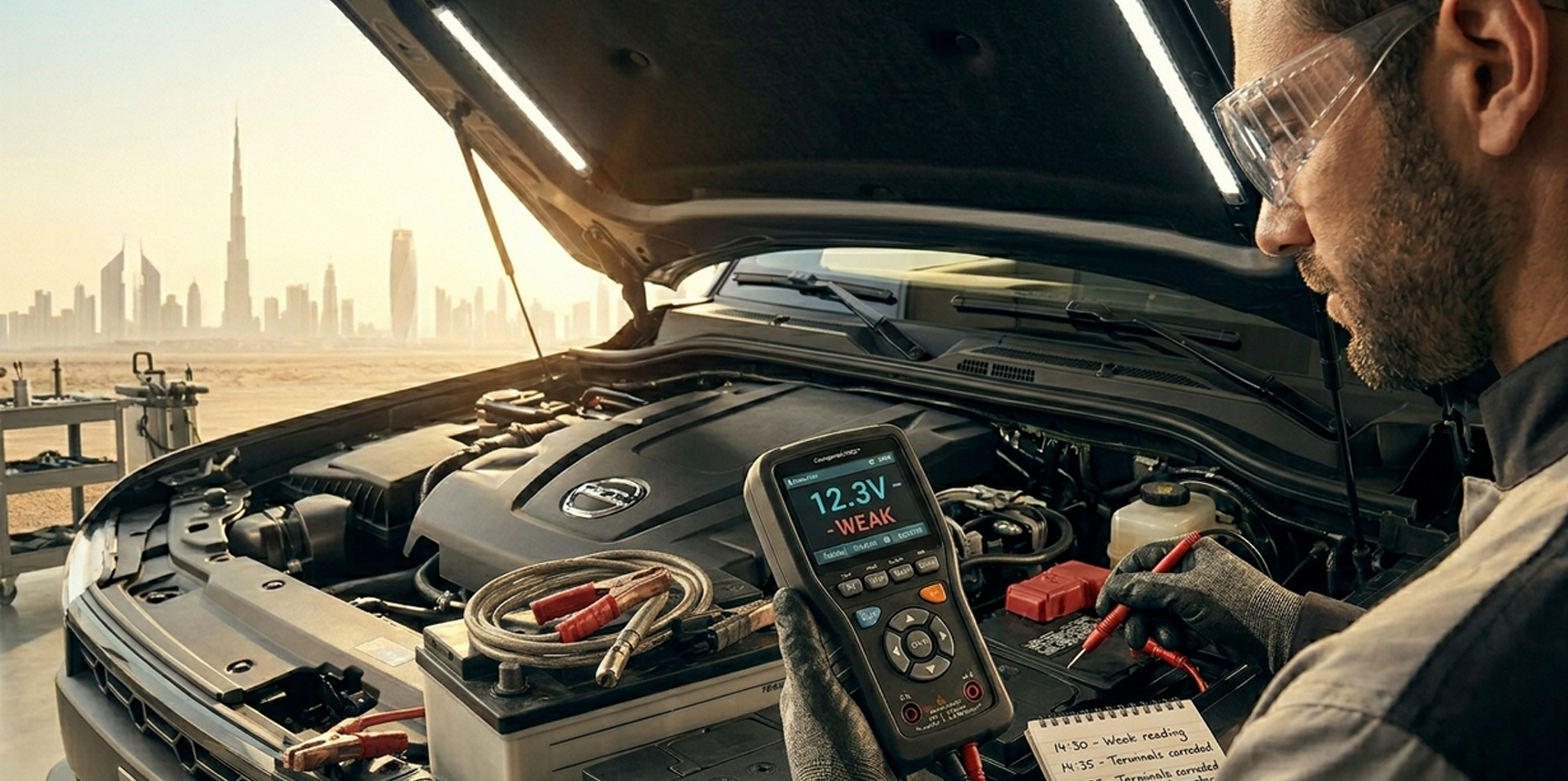
The best way to avoid sudden battery failure is preventive checking. Do not wait for complete failure. A simple battery health test can show whether the battery is strong, weak or needs replacement.
Here are some useful tips:
Check the battery during every regular service. Test it before summer, especially in hot regions. Avoid leaving lights, chargers or accessories on when the engine is off. Drive the vehicle for longer periods occasionally if it is mostly used for short trips. Keep battery terminals clean and tight. Replace old batteries before they fail completely. Use the correct battery size and rating recommended for your vehicle.
For fleet owners and commercial vehicles, battery checks should be part of routine maintenance. A vehicle breakdown can result in downtime, missed deliveries, customer complaints and additional cost.
Choosing the Right Battery
When replacing a battery, it is important to choose the correct type, size and capacity. A battery should match the vehicle manufacturer’s recommendation. Using a battery with the wrong rating can affect performance and lifespan.
Modern vehicles with start-stop systems, advanced electronics or high power demand may require special battery types such as AGM or EFB batteries. These should not be replaced with standard batteries unless approved by the vehicle manufacturer.
Quality also matters. A low-cost battery may seem attractive, but if it fails early or performs poorly, it can become more expensive in the long run.
Why Professional Installation Matters
Battery replacement may look simple, but modern vehicles often require proper handling. Some vehicles need battery registration or reset after replacement. Incorrect installation can affect electronics, settings and charging performance.
Professional installation ensures the battery is fitted correctly, terminals are secure and the charging system is checked. It also helps confirm that the old battery was actually the problem.
Final Thoughts
A weak battery rarely becomes stronger on its own. Once warning signs appear, failure may happen at any time. Slow starting, dim lights, warning lights, clicking sounds, electrical issues, corrosion and old age should all be taken seriously.
In hot climates, battery health becomes even more important because heat can shorten battery life and increase the chance of sudden breakdowns. Regular testing and timely replacement can save time, money and stress.
Your vehicle’s battery may be small compared to the engine, but without it, nothing starts. Taking care of it is one of the simplest ways to ensure reliable driving every day.




100% Customer Satisfaction

Genuine Accessories

Quality Service
